A Transimperial Matter: The Modern Life and
Death of Afro-Asian Ivory
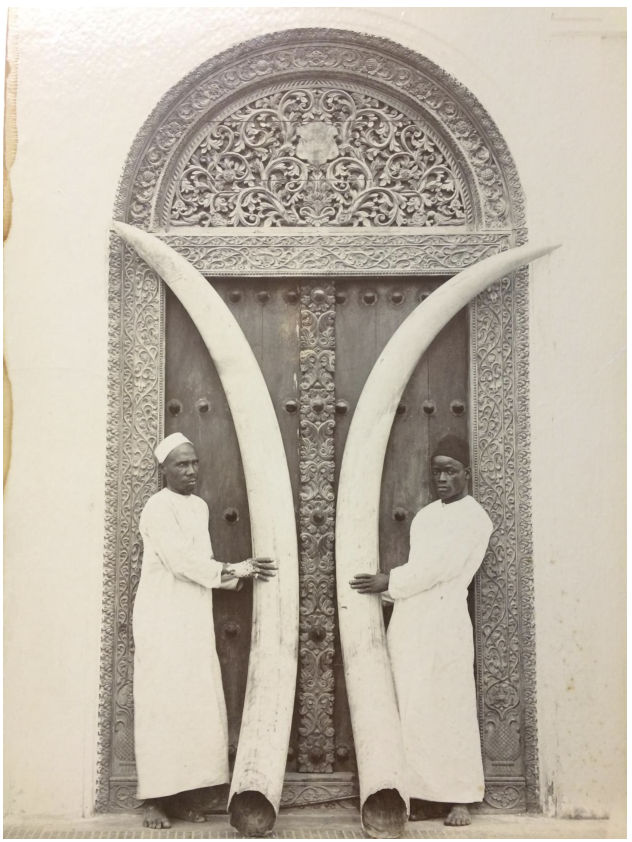
For over two millennia, East African elephants have been hunted to supply ivory to markets spanning the Mediterranean, the Indian Ocean world, and Asia, including imperial China and Mughal India. While art historians have examined ivory’s transformation into early modern courtly luxuries, its role in global capitalism and transimperial production remains underexplored. This paper investigates the material and aesthetic dimensions of what economic historians have termed the nineteenth century’s “ivory revolution,” a pivotal period that saw the transformation of ivory from a prized rarity to a mass-produced commodity.
By the late nineteenth century, East Africa’s elephants faced near extinction as millions of tusks fueled industries across Zanzibar, Bombay, Surat, and New England, creating objects of middle-class leisure such as billiard balls, piano keys, and combs. This paper focuses on the Swahili coast port cities, particularly Zanzibar and Mombasa, which supplied 75% of the global ivory market. Afro-Asian interactions were central to this trade: South Asian merchants and financiers from Surat, Bombay, and Mandvi dominated ivory markets, engaging African labor and expertise to supply this lucrative demand.
Diasporic South Asian Muslims on the Swahili coast, including figures like Allinda Vishram, were pivotal in globalizing ivory’s trade and consumption. South Asian artisans valued East African ivory for its unique density and sheen, integrating it into Indian Ocean mercantile cultures and artisanal practices. Meanwhile, industrialization in Hanseatic ports and New England factories commodified ivory, eroding its elite status and creating a globalized material culture of industrial, touristic, and everyday objects.
This paper highlights ivory as a transimperial material linking Africa and Asia, emphasizing how its production and circulation encapsulated the complex entanglements of capitalist globalization, labor exploitation, and cultural exchange.
Biography
Prita Meier is Associate Professor of African Art History at New York University. She earned her Ph.D. from Harvard University and specializes in the visual culture and architecture of maritime Africa, focusing on themes of circulation, empire, and globalization. Over the past two decades, Meier has conducted extensive fieldwork and archival research in eastern Africa, particularly in Kenya and Tanzania, including cities such as Nairobi, Dar es Salaam, Mombasa, Lamu, and Zanzibar.
Her publications include Swahili Port Cities: The Architecture of Elsewhere (2016), which examines the meanings of coral-stone architecture during the colonial era, and The Surface of Things: A History of Photography from the Swahili Coast (2024), offering a reinterpretation of photographs as dynamic artifacts shaped by oceanic mobility.
Dr. Meier co-curated the exhibition “World on the Horizon: Swahili Arts across the Indian Ocean,” which showcased over 150 objects from collections across Africa, Asia, Europe, and North America. Supported by two National Endowment for the Humanities grants, this exhibition highlighted the rich artistic exchanges between Africa and Asia.
Additionally, in 2021-24 she served as co-principal investigator of the Getty-funded Indian Ocean Exchanges program, directed by Dr. Nancy Um of the Getty Research Institute. This initiative amplifies expertise from the Global South, fostering collaborative research and networks among scholars and heritage experts within the Indian Ocean world.
 Home
Home 